September 23, 2011

How "To Go" in Togo

"Roads are in appaling conditions, and getting around without your own transport requires the patience of a saint and the determination of a fighter." – Lonely Planet West Africa guide book on Togo's transportation options
In my last post, I mentioned transportation in Togo as one of the reasons why PC considers this country to be one of the hardest to serve in. Now, I’d like to elaborate a little more on the transportation options in Togo and how I get around from place to place. When going somewhere, I essentially have four options–I can walk, ride my bike, take a moto, or get in a bush taxi.

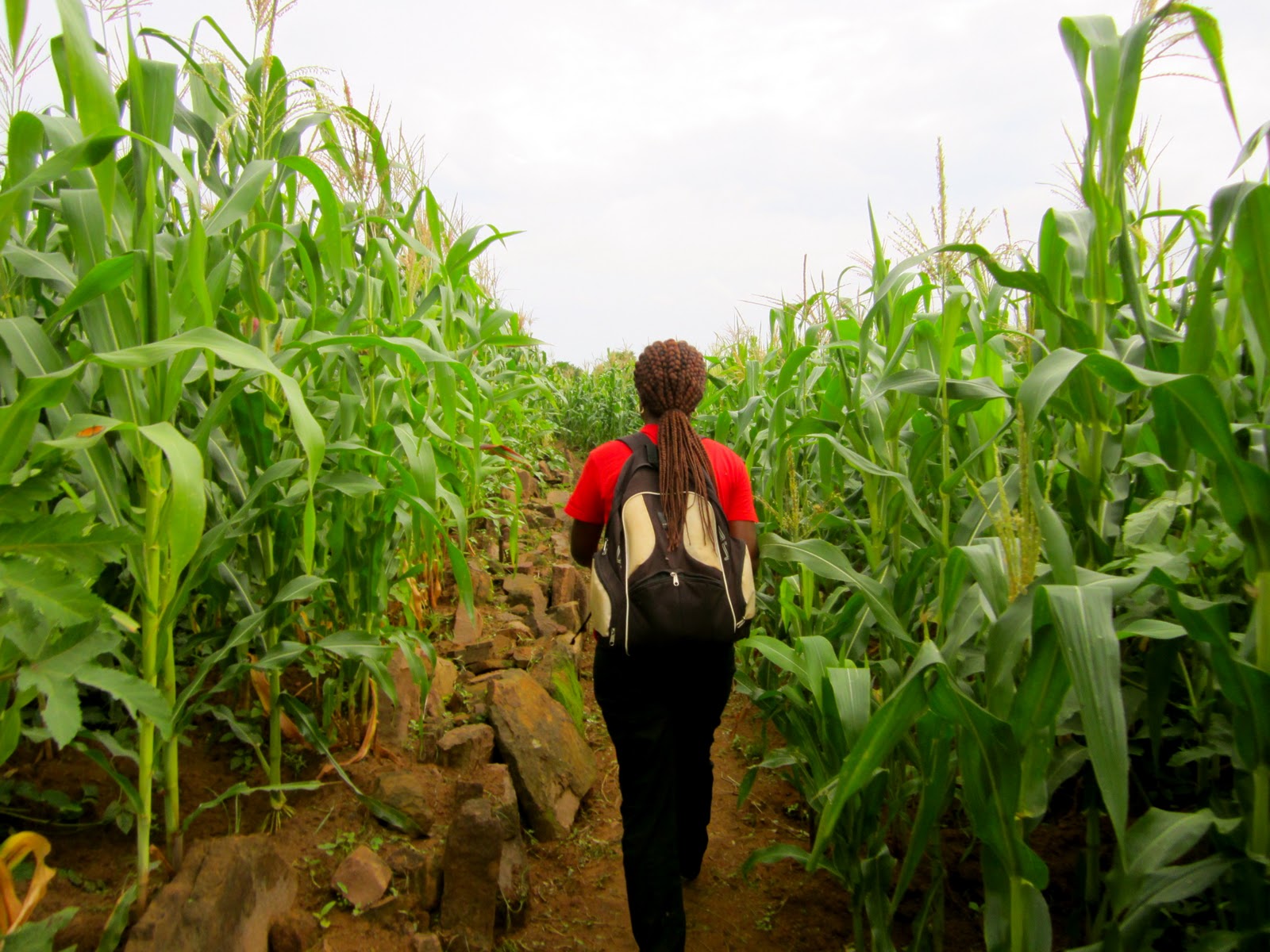
I enjoy walking. I think I get this from my mom (hi mom!), although she likes to walk for fun and I need a destination. Around Tandjouaré, this is mainly how I get around. It’s rainy season right now so everything is green and it’s almost harvest time so the corn stalks are as tall as me or higher. Despite Tandjouaré being a “big” village, it’s very rural, hilly and spread out, thus it takes a while to get anywhere. The walk to my marché is about 15 minutes. I take these paths that wind in and out of family compounds. They’re wide enough to take a bike or moto through but some parts get pretty rocky. I seem to take a different way every time I go or come back from the marché. Using a cell phone tower as my reference point, I seem to navigate the maze quite well. I stop along the way and saluer (greet) the people I pass. I met a man yesterday who used to teach English at a local school and was 82 years old! That’s pretty impressive, as the average Togolese man lives to be 60.


Biking. Before coming to Togo, I was not a fan of biking. I’m still not, but I’ve come to find it to be a convenient way to get around, plus it allows me to fare le sport (exercise). When I go visit my neighbor Assibi (a GEE PCV in the next town over) or go to the bigger marché in Bombaouka (the next town over) I ride my bike. I’ve also taken it to Dapaong, which is about 20k and takes about 1 hour 45 minutes. PC has supplied us with nice mountain bikes and taught us how to take care of it (such as repair a flat tire or fix a broken chain). We have helmets that we must wear, which are a good safety precaution but PCVs are the only people in Togo who wear bike helmets. My chain fell off once while riding around Dapaong and a man came over to help me put it back on. As I was leaving I heard him tell his friends “Elle est avec le Corps de la Paix”, so it definitely makes us identifiable.

Moto-ing. Most Togolese walk or bike, but those wealthy enough buy a moto. I always smile to myself when I see women on their own moto, as most moto drivers are men. A woman on a moto is a sign that she’s a badass. When I say “moto”, I’m referring to a variety of two-wheeled machines–street bikes, dirt bikes, mopeds, etc. As PCVs, we’re not allowed to actually drive the motos, although I’ve heard tales of rebellious PCVs in other countries who secretly buy their own moto… While Togolese law states that helmets are required, the only enforcement of this that I’ve seen was a piece of paper posted at the gendarme (police) station in Bambaouka. Before being issued our moto helmets, we were required to take a moto safety class. It taught us how to mount a moto (swing your right leg around from the left side so as not to burn yourself on the exhaust pipe), hold on to the rack behind you (as putting you hands anywhere near the driver would signal possible sexual intentions), and it’s okay to tell them to slow down or stop if you feel like your life is in danger.

Few countries allow PCVs to ride motos, and the fact that Togo is one that does proves how bad the transportation system here is. Without them, we would have a very difficult time getting from place to place. So how do you “get a moto”? It’s easy. You basically just have to be on a populated road while holding your helmet and magically 5 men with bikes will appear. I have a friend who hastily jumped on the back of a guys moto and directed him to her destination only to find out when he dropped her off and refused payment that he was just a guy on a moto who had nicely given her a lift. Around village, a moto ride costs between 100-300 CFA (roughly $.20-.60). PCVs in Savannes have formed good relations with some moto drivers who will come directly to your house or the workstation and are reliable and safe drivers. They also happen to be Muslim. Muslim moto drivers are preferred because they don’t drink and therefore, theoretically, should be sober but that isn’t always true.

The Togolese are pros at hauling things on motos and bikes. Seriously. Whether it’s a family of five, a 20-kilo bag (or 3) of grain or a cow, they’ll find a way to transport it. It takes mad skill to secure everything onto the bikes–a skill I hope to master during my time here–and you rarely see things fall.


Bush taxis are the most popular form of transportation for long distances, i.e. more than between a few villages. These are cars where seats are rented out. However, the drivers have a different idea of what constitutes a seat. Essentially, it’s however many people, babies, bags and animals you can cram into open airspace and not suffocate. You catch a bush taxi by flagging one down on the Route that’s going in the right direction, or, in the regional capitals, by going to a gare routière (a station).

Last weekend, I wanted to leave Dapaong but I had my bike and it looked like it was about to rain (yeah, and I was lazy) so I decided to take a bush taxi. I went to the gare and was told a car had just left but I may be able to catch it. So I biked further until the next gare and was again told it had left but we could see in the distance that it had stopped for gas. I quickly rode up to it and catch the driver just as he put the car into gear. I asked if there was room for me and my bike. A stupid question–of course there was room! There were only three full-grown men in the front and three women each with a kid (one breastfeeding) in the back of a economy sized 5 seat car. The driver threw my bike on top of the car and shoved my bag in the hatchback trunk, which already couldn’t fully close and was being held down by a 100 CFA ($.20) bungee cord. More gas was needed so I watched as they poured a liter from a glass bottle and closed the tank with what looked like a ball of duct tape. I climbed in the front seat through the driver’s side and was instructed by the two men to my right to put one leg on either side of the shifter. Yes, the car was a manual and yes, every time the driver needed to shift he had to reach between my legs. The road between Dapaong and Tandjouaré is pretty bad–lots of potholes–so he had to shift a lot as he sped up, braked and swerved to avoid them. We got pretty cozy and by the time we reached my destination, I’d garnered a marriage proposal. I’d also like to mention that young boys try to earn some money by “repairing” the holes and begging for tips. I say “repairing” but really all they do is shovel a dirt/sand mixture into the hole and pile it about 6 inches above the ground, creating a reverse pothole (or speed bump?) and probably speeding up the erosion of the road. The driver had to spot the holes and watch for oncoming trucks from behind a cracked windshield. When he hit a pothole, he’d look at his cracked side mirror to make sure nothing had fallen out of the back. The only mirror/window fully intact was the rear view mirror, which was useless as the back was piled too high with stuff to see anything. Just another day of travel in Togo…


The newest and most convenient form of travel is the post bus. La poste began offering a daily bus route that extends the length of the country. You buy a seat (your own, personal, cushioned seat) and can get on or off at any of the post offices along the Route Internationale where the bus stops to deliver mail. It even runs on Sunday. Theoretically, it’s a good option, but I’ve heard stories of the bus breaking down and the voyage taking 15 hours. My one experience with it was pleasant enough. We were, however, stopped on the Route for a little over an hour because President Faure’s family (he was not part of the group) was leaving Kara and the motorcade got blocked-off access on the route to the airport and back. That meant we had to wait as the plane loaded and took off. The plane entranced the Togolese. Air travel is rare and only a handful of flights leave and come into the Togo’s capital daily, let along it’s second largest airport. Planes also just don’t seem to have a reason to fly in Togo’s air space.

September 3, 2011

Other togo PCVs

So there are quite a few other PCVs who have blogs as well. you can find most of them through peacecorpsjournals.org but I wanted to highlight one specific post written by a fellow SEDer back during our first week in Togo. He's a great writer and very comical. Check it out if you get a chance. http://talesfromtogo.wordpress.com/2011/06/07/poop-management

Today was a good day


Today was a good day. A really good day. But I can’t say that all days are good. There’s a reason Togo is considered to be the second hardest country for PCVs to serve in (used to be third, but the program in Mauritania was closed not too long ago), based on things such as transportation options, food availability and variety, and internet/communication accessibility. Why am I writing about this? Well, that’s the reality of where I am right now. Life is not always easy. But today was a good day.

I found out last week that the NGO I am partnered to work with would be holding a sensibilisation, a town hall style meeting, to inform the villagers of Tandjouaré about malaria today. There are four types of malaria in the world, and the most deadly is prevalent in Togo. It is the most common cause of death for children in Togo, and there are simple things people can do to prevent it. (Don’t worry, I wear mosquito repellant, sleep under a net and take a weekly anti-malaria pill.) Well, I’m a small business advisor, not a health advisor, so I invited two of my fellow CHAP Savanners to come. It was our first experience with this type of event, and good for all of us to see. SM arrived last night and we made a delicious dinner of American mac and cheese (compliments of my aunt PT, thank you!) and sautéed cabbage, onions, tomatoes and green beans. This morning was on the chilly side, so we had a cup of hot chocolate with marshmallows (thanks again PT!). MM met us at the marché, I found a woman selling green beans and tomatoes (the first I’ve seen in my village since arriving at post), and we enjoyed some tchackpa, a local drink of fermented millet. Then we headed over to watch the presentation. There was a really good turnout and the people seemed excited and interested. I was impressed with the speakers and microphone setup that they had, although they couldn’t quite figure out how to get it to work properly. At the end, they brought the three of us in front of everyone to introduce ourselves and say a few words. My French pales by comparison to the other two, as does my knowledge of malaria, but it went well and at the end they asked us to dance. In front of the entire village. And we did.  They loved it. After, my coworkers invited us to have a beer with them and we all talked for about two hours. It may not sound like much, but days like this are the reason why I am here. It was a good day.

Many PCVs talk about the volatility that one can experience through the course of a day. Perhaps you ripped your pants or were called yovo or la blanche one too many times that day or were overcharged for a moto ride or somebody rambled on to you in local language expecting you to understand. These things happen. But then you come across a spectacular view or somebody says bon arriver and offers a friendly smile or you find green beans at your marché or a child shyly peeks around a wall and squeals with delight as you say good morning in local language and wave, and in an instant your mood switches.

I started this blog in order to share my experience with friends and family back home. It’s going to be a long two years filled with lots of new experiences. I hope you continue to read the blog and enjoy it. However, there are reasons why I am here and why Togo is ranked 220 in the world in GDP per capita ($900 USD) and why the average Togolese only receives 10 years of schooling. Life here is hard and from time to time I will share stories of my struggles or of the hardship, poverty, and despair I sometimes see around me. But today was a good day, and I wanted to share it with you.

Written August 31, 2011

August 19, 2011

Food, Glorious Food!


This post is about… food! That wasn’t obvious, was it? I’ve had a lot of questions about what I eat, what food is available, and how the Togolese food is. I’ll begin by saying that–apart from people–food is what I miss most.

When I was living with a host family, the meals were decent, but there were about 5 or 6 different dishes that rotated. For breakfast, I always got a loaf of bread. On good days, there would be vache qui ri (VQR), or laughing cow cheese, i.e. the only type of cheese readily available in Togo because it doesn’t require refrigeration. Sometimes I would get oatmeal, which was good but different because the oats had been pounded into a powder before being added to the water. Tapioca (a favorite dessert of mine back home) also made frequent appearances at breakfast, but it was unsweetened and more watery than what I’m used to. Other days I would get peas, carrots, green beans, cabbage and onions cooked in oil and drenched in mustard (and I’m not a fan of mustard…). My favorite thing to see was spaghetti with any sauce. It may just be because it’s so familiar, but I’ve come to realize just how much I love pasta. Plantains were a common dish, mixed with tomatoes, onions and carrots. Sometimes soja, or tofu, would be added to the meals as well. Soja is very prevalent here, a good source of protein, and much better here than the times that I’ve tried it in the States. One dish I really didn’t care for was beans soaked in palm oil, which you then add this floury grain called gari to it to soak up the oil. It was just very dry. Couscous and rice with varying sauces are some other examples. Overall, I found the food during my homestay to be good but not very satiating.

Togolese Food: The two most common Togolese dishes are pâte (pronounced ‘pot’) and foufou. Pâte is usually made out of farine de mais, or corn flour, but sometimes rice is used. There are a few different types of sauce that can be added to it, the most common one that I’ve seen is called adémè, made out of a leafy green (the smell is familiar but I’m still trying to figure out what it’s called in English) with either chicken or dried fish added to eat. I had pâte with a colleague of mine the other day with fish and she encouraged me to eat a lot of the fish, which is very kind of her because fish, or protein in general, tends to be more expensive and is saved for the head of the family. So I ate the fish. Head, bones, tail, eyes–everything. It really wasn’t bad; it was more of a mental block that I had to get through. Togolese live off of pâte. They eat it for breakfast, lunch and dinner, and never tire of it. I had a running joke with my host mom where she’d have me guess what my host dad had requested for dinner and I would hesitate and then say “umm…pâte?” She got a kick out of it. Pâte rouge was the Togolese dish I requested whenever friends came over for dinner with my host family. My host mom even taught me how to make it. It’s farine de mais with the red sauce and chicken cooked into it. The texture reminded me of polenta, although the taste is completely different. Foufou is another dish that I really enjoy, especially with sauce arachide, peanut sauce. It’s made with yams or cassavas that have been boiled and then pounded into a doughy ball. Unfortunately, foufou is more of a southern Togolese food than northern, so I’ve had a difficult time finding it in the north, but I hear it is possible to get it in Dapaong.

Before coming to Togo, I thought I would be craving sweets the most. I’m not sure if it’s because we sweat so much, but I really crave salty foods. As a snack (alright, occasionally it’s a meal when I’m lazy), I make popcorn, add a ton of salt and wish that I had the liquid movie theater butter to drizzle over it. The only types of chips I would eat back home were Pringles, Ruffles, Fritos and tortilla chips, and lucky for me, Pringles exist in Togo! They’re a little hard to find, but I’ve been told it’s possible to get them in 3 of the 5 regional capitals (sadly, Dapaong is not one of them). I’m going to send friends in those capitals to find them and send them to me J

VQR is an amazing invention (granted, I’m saying this as I dream of eating a fresh ball of mozzarella cheese). Why is it amazing? No refrigeration required, long shelf life, can be melted and made into a mac and cheese sauce or nacho-like dip (had this once with a Mexican inspired meal and it was delicious!), and it supposedly makes a pretty convincing cheesecake. I have yet to try the last one, but am excited for the possibility of it.

Another amazing invention is powdered milk. Those of you who know my family know that I was brought up drinking a glass or two of milk with every meal. In college, my milk drinking decreased significantly because, with six people sharing one fridge, there wasn’t enough room to stock the amount of milk I was used to drinking and I therefore had to ration my milk. Sans refrigerator here in Togo, milk is almost as uncommon as cheese is, the exception being powdered milk. I’ve found myself adding it to everything–my oatmeal, mac and cheese, the dough to make flour tortillas, and my corn flakes. Yes, corn flakes. I got them in Lomé and have been eating them the past week for breakfast. I feel a little weird pouring my filtered/bleached water over my cereal, but it tastes good, it just isn’t as cold as I would prefer it to be.

When I first found out my post, every Togolese I talked to would mention the abundance and cheapness of meat and eggs. While the north heavily lacks a good variety of vegetables (I can only find onions, garlic, okra and adémè in my village marché right now), I assumed I would not have a hard time getting an appropriate amount of protein in my diet. Well, I can find pork, goat and dog meat in the marché. (I try to avoid walking past the dog butcher. It’s depressing.) If the meat is already cooked (and being sold on the side of the road, for example), I have no problem eating it (with the exception of dog). However, I have yet to buy meat and cook it myself. I know I will eventually but I’m just hesitant to do it. I’ve also seen whole, live chickens and guinea fowl for sale but I’m not yet to the point where I could kill and cook it by myself, so my protein diet is still pretty limited. Eggs (both chicken eggs and guinea fowl) are abundant, but most people au village keep them for themselves rather than selling them in the marché. I plan on asking around though and finding a reliable and constant personal supplier of eggs.

The other night, some colleagues of mine at Code Utile invited me to have a drink with them. They had gotten a chicken, cooked it and were bringing it to a bar. It was the first time in village that I’ve left my house after dark, and the chicken was amazing! They were speaking too quickly for me to understand everything, so I mainly just listened and enjoyed the company, but it was really nice to be included. Once I get my kitchen organized and better stocked, I plan on making them an American dish.

The medical unit is very concerned about our diet while in Togo. They want us to remain healthy and have adequate and balanced meals. Many Americans don’t follow a balanced diet, and this becomes a lot harder to do in Togo. To help us, they provide all PVCs with a cookbook called “Where There is no Whopper”. It’s a compilation of recipes one can make with the resources available here. Some call for ingredients that are rare or only available in the regional capitals (like ground beef), but it’s great to have. I try not to look through it when I’m hungry because it only makes me salivate. There’s also a section on baking, which requires and oven, so I’m thinking about investing in the supplies to make a dutch oven…

So that’s my overview of food in Togo. The food here is a lot fresher than it is in the States. No preservatives make everything last only a couple of days. (Bread gets moldy in two days.) I look forward to discovering my cuisine capabilities here in Togo. Older PVCs, I’ve found, are great resources and they have made some of the most satiating food I’ve had in country. I’ll be sure to update on any new culinary discoveries.

August 13, 2011

Don't worry, I'm alive


So that was my rapid update of posts. I hope to have better access to internet now and I plan on buying a mobile internet access key soon, so expect more timely posts. I’m going to try to have more themed posts from now on. I have a couple topics in mind but if there’s anything that you’re wondering about that I haven’t mentioned, just let me know.
Other updates:
I have a new phone number. Togo changed all the phones from 7 digits to 8. Apperently, this is something that the US might have to do soon as well. I have updated that as well on the contact page. Also on the contact page, you can find links for cheap calling cards to Togo…
I also have a new address. It’s been added to the contact page. I can still receive mail at the old address, just this one is (theorhetically) supposed to be faster. Any package sent needs to have Corps de la Paix written under my name. It helps it pass through customs with a fixed price. Also, if there are any liquids in the box, they should be placed in a ziplock bag and should not be declared.
Now that I’ve been in Togo for over 2 months (it’s strangely gone by very fast but has felt very slow…), I have a better idea of things that I would enjoy receiving in a care package. There’s nothing on the list that I absolutely need, but people have been asking. I’ve already gotten two packages (shoutout to my mom and Peggy), which were both amazing, but I realize it’s not cheap to send them. Letters, on the other hand, are only $0.98! If you write to me, I promise to write back :)
Alright, that’s the end of my updates for now. There are 3 other new blog posts, starting with July 5. Love and miss you all!

August 9, 2011 - Swear in and first week at post


I officially swore in as a Peace Corps Volunteer on Thursday, August 4. All 23 of us made it through stage. It was a nice ceremony. The country directed gave a speech, along with the interim ambassador (the previous ambassador retired at the end of July and a new one should be chosen by the end of the year), a Togolese representative and the 23 of us. One person in our group gave a long speech in French, which I was really impressed with because he didn’t come in speaking the most French and right before we left for the ceremony he discovered that he’d spilt water all over his speech. The rest of us gave speeches in our local languages, although I must admit there were very short. I have a recording of my formateur saying my speech which I’ll try to post so you can hear what it sounds like. There were multiply press people there and they broadcast the ceremony on Togolese television the following Monday.
We had two very short days in Lomé that were spent doing administrative stuff, buying supplies for our new houses and enjoying our last moment as a group. The next time we’ll all be together is in 3 months when we have in-service training (IST). My big purchases included a mattress and gas stove and my indulgent purchases were a bottle of champagne and a ball of mozzarella cheese. The night before we left we had a swear-in party. A lot of current PCVs came into Lomé especially for the event and it was so much fun hanging out with them and dancing to American music.
We got up super early the next morning (Friday), loaded all of our stuff onto bush taxis and said goodbyes. Admin decided to make our trip a 2 day one, so I didn’t arrive at my post until the next morning (Saturday). I had left my keys with my homologue because they were going to paint the walls in my house. Well, there was a lot of confusion as to who had my keys and where that person was. I ended up spending the night elsewhere and not getting into my house until Sunday afternoon and not having all my stuff moved in until Monday afternoon. But it all turned out alright! I’m excited to start organizing and decorating my house. It’s nice to have my own space and to finally unpack, since I’ve been living out of my suitcase for the past two months.
The first 3 months at post are meant for us to get settled into our houses and get familiar with the community. It’s not until after IST that we can start projects, which is nice to not have pressure to immediately jump into things. I’m still learning French and now I have to learn some basic Moba too. My French comprehension has definitely improved but speaking (and actually being understood) is still a struggle. It’ll come though.
Two of my closest (distance) neighbors hosted a science camp for girls in their villages this week and I was able to go and observe one day at each of their sites. Watching them was really inspiring, especially because they both came in with little to no French and now can easily communicate in both French and basic Moba. One is about to finish up her two years here (she should be replaced so I’ll be getting a new neighbor in November, exciting but I’m sad I only get a couple months with the current PVC) and the other is SED like me and just celebrated his one year. It was the first time I’ve been able to observe PCVs working in their community and I really appreciate them letting me come.

July 17, 2011-Post Visit


We met our homologues the Friday morning before we left for post visit. A homologue is a person who introduces you to your new community, helps you get settled into you house, and is the first person you will work with (but not the only person). My homologue is named Roger and he works with an NGO in Tandjouare called Code Utile Afrique. I’m still trying to figure out everything that they do, but I know they work with groupements (a group of people work together on a collective project), most specifically with women, and they have a health clinic. I’ll learn more when I return to my post after I swear in, but my French is still very basic so this is all that I was able to figure out for now.
The five of us that will be posted in the Savannes region were put into one rented bush taxi, along with our homologues and all of our stuff (bikes included, it’s amazing how the Togolese are able to stack things on top of the vans–sometimes the load is taller than the van! I’ll try to get a picture and post it). I’m not sure if I’ve described bush taxis before but they’re usually a 12- or 15-passenger van used in place of public transportation. The driver works along with “sidekick” who sits in the seat closest to sliding door with the window open and whose job it is to flag down other passengers along the road going in the same direction. Oftentimes, the vans will be filled way over capacity. However, since PC rented the whole vehicle, they weren’t allowed to pick up anyone else. Lucky me, I got sick the night before we left. It made for a very fun journey up north, one where I really didn’t eat or drink anything for fear of my stomach not agreeing with it.
We left Tsévié at 7:30am and I got dropped off at 10pm. We made a couple stops along the way, once to repair a flat tire. It was really refreshing to see the whole country and pass through many of the towns where other volunteers are posted. I was under the impression that the further north you went, the dryer and less green the scenery got, but it’s rainy season right now so everything is green and it’s absolutely gorgeous. There are a lot of hills in the northern two regions and they’re a mixture of grass, dirt, rocks and trees. Upon being dropped off, I was greeted by about 7 or 8 people and ushered to sit down. I was first offered a drink made with flour and water, which I was told was only tradition and I did not have to actually drink it. Next came dinner, spaghetti with chicken. I love spaghetti and the food looked really good, yet I was still wary about my stomach. I tried to eat as much as I could, but I hardly made a dent in my place. I felt really bad, as I didn’t want to offend anyone. (Later, I found out that they had prepared the food at 4, not knowing when exactly I would arrive and one women told me that she was on the toilet all night after eating it so I felt a little better.)
The place where I got dropped off is called Soukala. It’s a hotel and restaurant located directly off the Route Internationale and is where the director of Code Utile and his wife reside. There’s also a mini museum which is basically a traditional Moba family compound used to teach tourists and modern Togolese about the local people and the way they used to live. It’s a really cool setup and I hope to be able to work with them and help make it an ecotourism site. After dinner, I (along with all of my stuff) was strapped on to a moto and transported to my house.
My house is very cute. There are two rooms in the main building. One will be my living/dining room and the other my bedroom. There’s a traditional styled hut right outside that will be my kitchen, although it’s a little small and the floor is concave so I may build an outside cooking area for when it’s not rainy season. Maybe I’ll build myself a stove...(you can’t find bread in my village, which was a huge disappointment so maybe I’ll just learn how to make my own). I also have a brand new latrine and shower room. The latrine has a western toilet on top so it seems relatively normal, although you don’t have to flush so therefore the bowl gets really dirty… I just know that when I go back to the States I’m going to forget to flush toilets. So there’s no running water. There’s a pump not too far away but I was told I’m not strong enough to carry my own water so I have and 8 year old girl who will fetch it for me. I’m not insulted by that because I’m pretty sure they’re right, although I would like to try carrying the water on my head sometime. I do have electricity, but it’s only for the hours 8am-noon and 3pm-11pm, which is honestly all that I need. There’s no light in the kitchen though so if I wait to long to start cooking I have to use my headlamp, which results in me having to swat away bugs every 10 seconds or so.
I live by myself, which has its pros and cons. Pros: I have more privacy and am free to come and go and do as I please. Cons: I lose out on the social aspect of living with others and learning the local language easily by speaking with them. There’s also some security that comes with living with others, but my neighbors all seem very nice and I’m planning on getting a dog.
So post visit went well. There were many awkward conversations, but that’s to be expected. I met a few of the chiefs (or chefs in French) of the surrounding villages and they were all very nice and welcoming. One gifted me about 15 guinea fowl eggs. They’re as common as chickens are up in the Savannes region. The shells of the eggs were so hard that I had to use my kitchen knife to chop them open. The taste is the same but the yokes are this bright orange color. I made omelettes and I kept thinking that someone put food coloring in my eggs.
Friday morning my homologue took me into Dapaong. It’s tradition for the current PVCs to throw a post visit party for all the newbies. Since Savannes is the furthest region north, we split our journey back down south into two days and got to have two parties! PC provides us with a work station in Dapaong, which is great to have because there are a few beds if you need to stay the night, internet access and a kitchen. Being so isolated from the rest of the country makes the workstation essential because it’s the main meeting point for my cluster of PCVs and it’s great to have a place to work when we come into town. The food at both parties was amazing! First, to have a variety of dishes available to choose from was a luxury, and second, I was really impressed by the food they were able to make with limited resources. Some of the highlights included fudge, apple pie, a Mexican lineup featuring beans, homemade tortillas and an amazing cheese sauce, and milkshakes. The newest volunteers are in charge of planning the next stage’s post party so I’m already thinking of ideas for the new stage that comes in September.

July 5, 2011-Lord of the Flies


It was one stagiaire’s birthday last Thursday and she wanted to celebrate by killing, cooking and eating a chicken. None of us had ever actually killed a chicken, let alone defeather it before cooking it, but that didn’t stop us. We forgot to designate one person to buy the chicken, which resulted with us having two chickens to kill. Even better. Before entering PC, I had always thought of killing a chicken as a sort of right of passage for all PVCs. Well, the birthday girl ended up being a lot more scared of killing the chicken than I think she had thought she would be. After about 10 minutes of her screaming that she couldn’t do it, another stagiaire volunteered to do the first chicken. You know that saying “run around like a chicken with its head cut off”? Well, it’s actually true. The chicken’s body was still jerking around for a few minutes after its head was cut off. Definitely a strange thing to see happen. The birthday girl eventually went through with it and killed the second chicken. Good thing we had two chickens! I helped defeather them and we ate it with stir fry.

This was all good preparation for our 4th of July celebration plans. Our big idea was to roast a pig. One stagiaire’s family helped him kill and gut the pig and then brought it over to our training house on Sunday. I don’t know how much a pig costs back home, but we paid 30,000 CFA ( ̃$60) for it. The guys dug a hole in the ground and lined it with stones. The plan was to put the pig in the hole, cover it with charcoal and then bury it and let it cook over night. Someone saw it done like this on TV – how hard could it be, right?

Another girl and I attempted to make tortilla chips. We had another person making the salsa and the vegetarians were making bean burgers. We wanted to make corn tortilla chips, but couldn’t find any corn flour–an oddity because the Togolese staple, pâte, which they eat 2-3 a day is made with farine de mais. The marché sells to corn kernels and then everyone grinds it into flour at home. You’d think someone would get the idea to sell already ground corn flour... So instead we used regular flour, added salt, oil and water, and fried up small pieces in a frying pan. It took forever but turned out wonderfully. They weren’t crisp, more like pita bread, but everyone thought that they were delicious. Togolese make an oil with palm trees called huile rouge, and it gave the chips a fun and patriotic red color. And just as we were finishing up the rest of the food, the guys dug up the pig.

It turned out that the coals hadn’t been evenly placed around the pig and the part that hadn’t been cooked had begun to rot. At this point, most people lost their appetite for pork, but some were more determined. The guard stepped in and helped the guys cook it using more charcoal and placing it strategically. After another hour or so, they took out the pig, brought it into the kitchen and began to carve it. There were three piles–cooked, rotted, and good but could be cooked some more. One guy brought some homemade BBQ sauce from South Carolina and it went perfectly with the pork, although I was only able to have a few pieces. Not sure if I was full from munching on all the other food or if I had a mental block, but I at least tried it. There was a lot of meat left over so we offered it to the guard and the (non-Muslim) formateurs. Overall, the day was a success. It was fun and turned into a great story. I titled this post “lord of the flies” and, if you’ve read that book, my 4th of July was eerily similar.

*Shout out to all those who were at my parent’s house for the 4th. I just received what you guys wrote to me and I loved it. It was nice to hear from everyone and it made it seem like I received a stack of letters that day. Thanks!

July 1, 2011

Don't Call Me Yovo

*Hey guys, so internet is hard to get to and slow right now during training. I've writen a few blog posts over the past couple weeks and have just now gotten them up. My togo cell phone on the contacts page so feel free to call me. I'll get back to your emails as soon as i can but realize it may be a while...*

Yovo is the term here in Togo for “light-skinned person”, aka white people. This does, however, include asians, latinos and even African-Americans, so basically anyone not from Africa. It’s not meant to be demeaning, it’s just a matter of fact here. On my 5 minute walk to class I probably hear “Yovo” at least 10 times, and those are just the people who say it loud enough for me to hear it. In general, I think calling out any word to a stranger passing by is inappropriate, so this has been something that I’ve really had to adapt to.

The majority of the time, it’s kids who call out Yovo. (Sometimes, though, adults do it too, which I have been assured by my host mom is not okay for them to do.) The kids get all excited when they see us and start singing a little song that goes like this: “Yovo, yovo, bonsoir. Ça va bien? Merci!” Picture a group of 3 years olds trying to sing this in unison when they don’t even speak French yet, and it can sometimes get pretty entertaining. I’ve found that some days it makes me smile. I try to always be polite to the kids, but there have definitely been days when I just want to yell at them to shut up. Unfortunately, this is something that I’m going to have to get used to.

Volunteers have different methods for trying to combat the yovo callout. Occasionally, a simple bonsoir or bonjour back quiets them, but this generally only works until you turn away from them and then the singing resumes. Another one is to stop and say “Je ne m’appelle pas Yovo. Je m’appelle Katy”, but that only works with the ones who know english and in a town as large as Tsévié there’s no way you can tell every kid your name and have them remember it. I walked the same path as another female volunteer and I’ll sometimes get called her name. Some people have also tried, in the mornings, to tell the kids that the song is incorrect because it says bonsoir (good evening) and the correct way would be to say bonjour (good  morning). We visited one PCV in her village her would do a special handshake with the kids only when they called her by her name and not Yovo. My favorite response, although I have yet to do it, it to say “Ameeba” back to them, which means “black person”. I’ve been told this one really stumps them. We’ll see.

The Yovo calls get worse worse we are in groups. One day, we had a bike lesson where we all road on the Rue Nationale (the main road in Togo, their equivalent to a highway). Not only were there 10 of use riding in a row, but we all have to wear bike helmets that make us stand out even more because the Togolaise never wear them. We started singing the baseball chant that goes “Everywhere we go, people wanna know, who we are, so we tell them, we are the Yovos, the mighty mighty Yovos…” It was a great comic relief for us and now someone will occasionally break out into song and make us all smile.

In other news, I found out where I will be living for the next 2 years. It’s a town called Tanjouaré and it’s in the northernmost region of Togo called Savanes. I’ve been told the town has about 15,000 and it’s right on the Rue Nationale so it should be easy to get to. I’ve heard that there’s a really good group of volunteers up there, which is important because it’s definitely isolated from the rest of the country. I’m going to be working with an NGO that focuses on helping women gain business skills, but this is probably just going to be a small fraction of what I do. More on it later though, as we have a post visit week starting on July 10.

June 17, 2011

Today was a long day, filled with lots of French. I had 2 hours of French class in the morning and then we went to a local NGO to observe their setup and ask some questions. Well, this was all mainly in French as well. Even with my limited French abilities, there are some people here who I can understand very well due to their pronunciation. On the other hand though, there are some people who I cannot understand at all. (Side-note, my host mom is one of these people but I’m getting a little better at understanding her...) One of our trainers was translating the conversation into English, but unfortunately that was really hard to hear due to the rain pounding down on the tin roof of the room we were in. Overall, it was really nice to see how a successful NGO is run here in Togo, but it tired me out.

It was still raining when it came time to walk back home for lunch. I was wearing flip flops, which are very difficult to walk in when it rains because they either get stuck in the muddy, sandy roads or make it really easy to slip on the slick parts. I elected to take off my shoes, which I found earns me even more attention than the color of my skin (any light skinned person here is called Yovo, but more on that in a later post). Two separate concerned groups of women stopped me to ask why I wasn’t wearing my shoes. Personally, I found this a little odd because people walk around barefoot all the time. When I walked into my compound, my whole family made a fuss about my dirty feet and they made sure they were cleaned right away. My sister called me a baby because I had two other people helping me clean off my feet. The whole scene was a little ridiculous but I’ve learned that you can only walk barefoot in Togo when it’s not raining. My sister, concerned that I didn’t know how to walk in the rain, walked me to class this afternoon and pointed out the proper areas of the road to walk on. I still got quite a bit of mud on me, but I didn’t fall so I think I’m allowed to walk in the rain by myself again.

This afternoon was yet another French lesson. Double whammy. I realized today at the NGO how important speaking French well is going to be for the work that I do here in Togo, yet there is only so much information my brain can absorb in one day. On top of that, my teacher assigned a ton of homework due tomorrow. Ugh. So I finished the day’s lesson and headed to the bar with 3 other friends (to do homework, I swear I didn’t have anything to drink). While we were sitting there, a boy about 3-4 years old walks up to us. When they’re that young they haven’t gone to school yet and therefore don’t speak any French. We said the few phrases we know in Ewe and found out his name was Coco. At this point his mom comes to take him away but the kid does not want to leave. The mom says “he’s yours now” and walks away, leaving us all a little dumbfounded but we assume she’s just around the corner. We notice that the kid has a little plastic bag with him with some stuff inside. We try to ask what it is, but the conversation was completely one-sided. One of my friends said it looked like rocks, but I thought it was just bits of old chocolate so it had a whitish coating. The boy was very generous and offered some to my friend. She took a piece and put it in her mouth only to take it out immediately and confirm that he was indeed eating rocks… out of a bag…

When it came time to leave, we didn’t know what to do with the boy. His mom was nowhere in sight and he was too young to know where he lived. We talked to a couple people and eventually found someone who knew him. Coco gave us some good entertainment and there were numerous references made to Big Daddy. We told the boy we renamed him Frankenstein, which we later had to shorten to Frank so that he could pronounce it. All in all, Coco/Frank was exactly what we needed to lighten up our day.

Then tonight, papa and three neighbor kids were all intensely watching an Indian movie dubbed in French. I joined them while I ate dinner and even though I couldn’t understand it all I got hooked to the story. So this guy was riding in a car. Someone else was driving but they hit another car. The guy gets out and finds that the girl he loves was in the car that they hit. I thought she was dead at first, but it turned out that she was in coma. The guy is beside her bed telling her how much he loves her and how she has to wake up when she suddenly moves her hand and then the dvd freezes…